2016 – Saba Health Care Center, Renovation and MEP upgrade, Saba

The interior renovation of the small hospital on the volcanic island of Saba responds directly to its unique topography, climate, and cultural context. Known as the “Unspoiled Queen of the Caribbean,” Saba is defined by steep volcanic slopes, dense rainforest, and the absence of horizontal terrain. Its architectural tradition—white façades, red gabled roofs, green shutters, and stone retaining walls—reflects a strong visual coherence rooted in necessity and place.


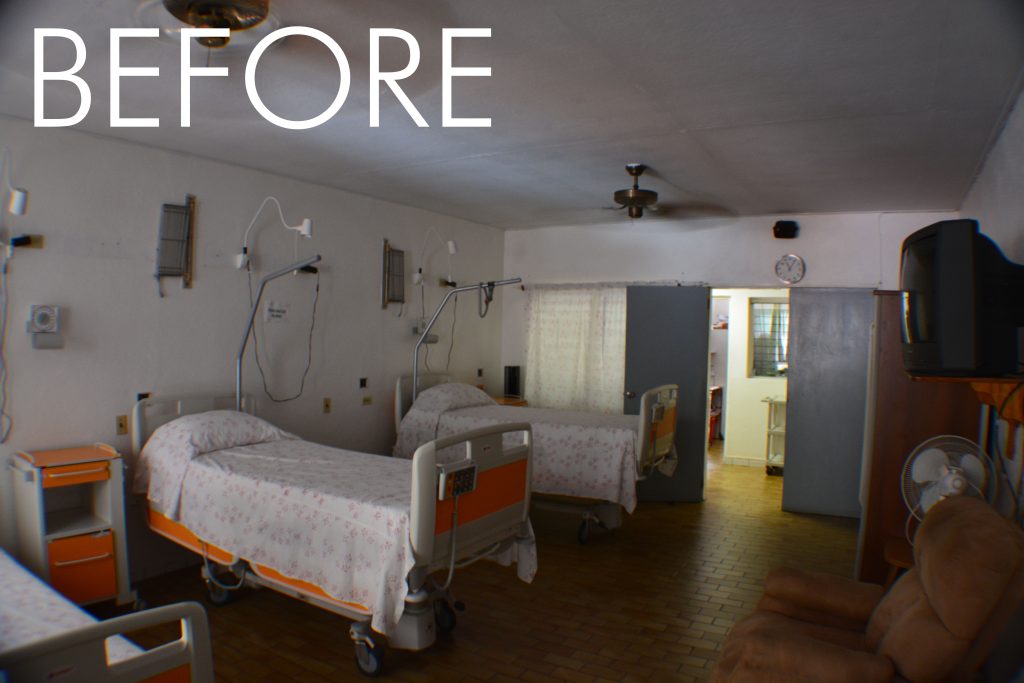
As part of Saba’s ongoing modernization following its designation as a special municipality of the Netherlands in 2010, the hospital, originally built in 1981, was renovated in three phases to ensure continuity of care and minimize disruption. Designed by DAM Caribbean for the Saba Health Care Foundation, the project aimed to create a contemporary healthcare environment that balances clinical performance with spatial warmth and clarity.

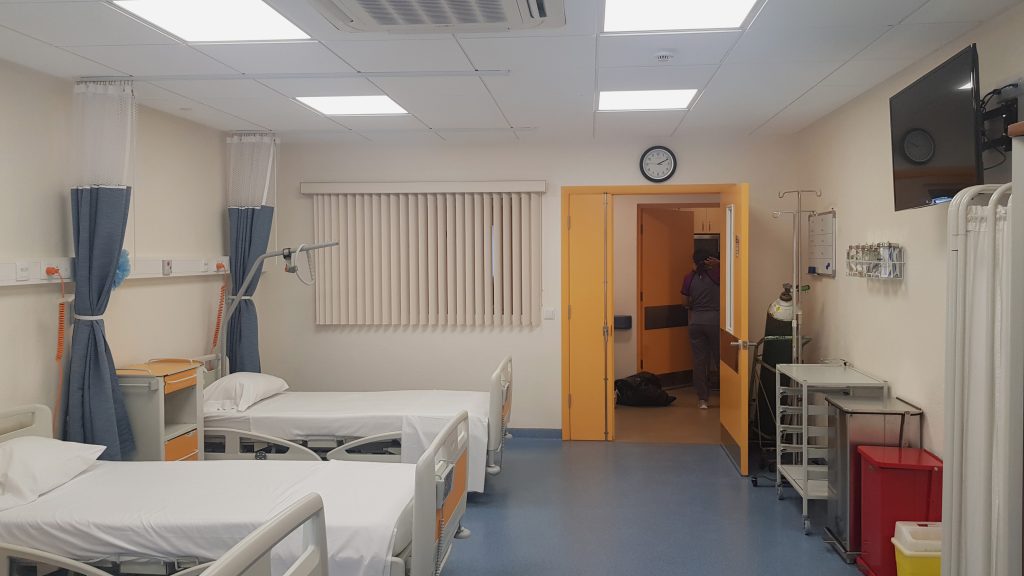
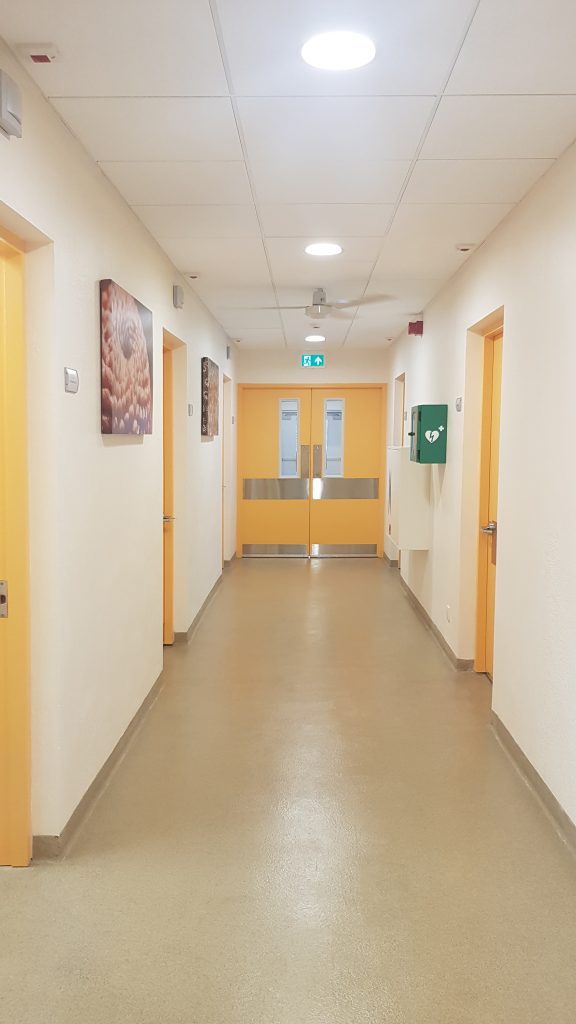
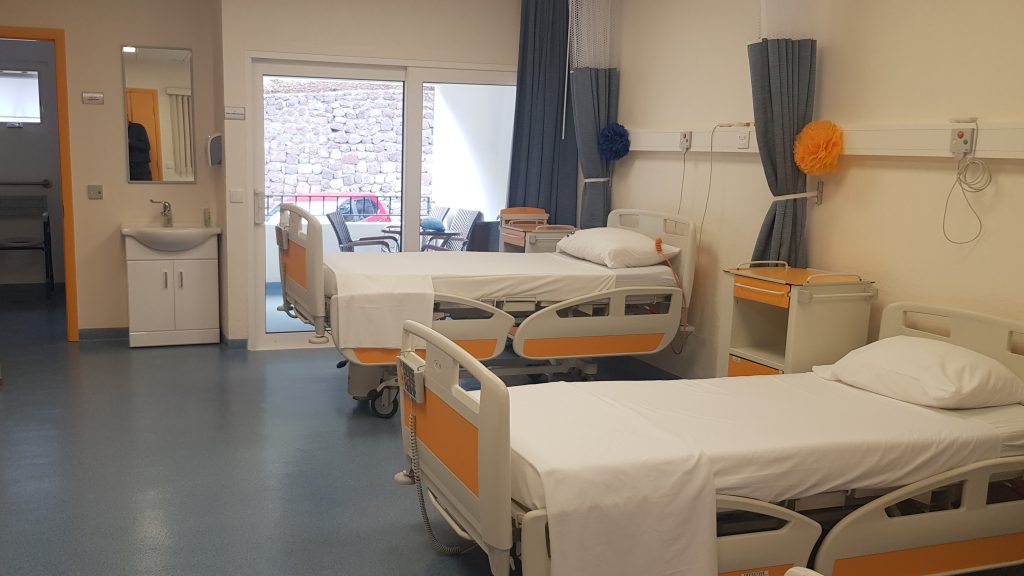
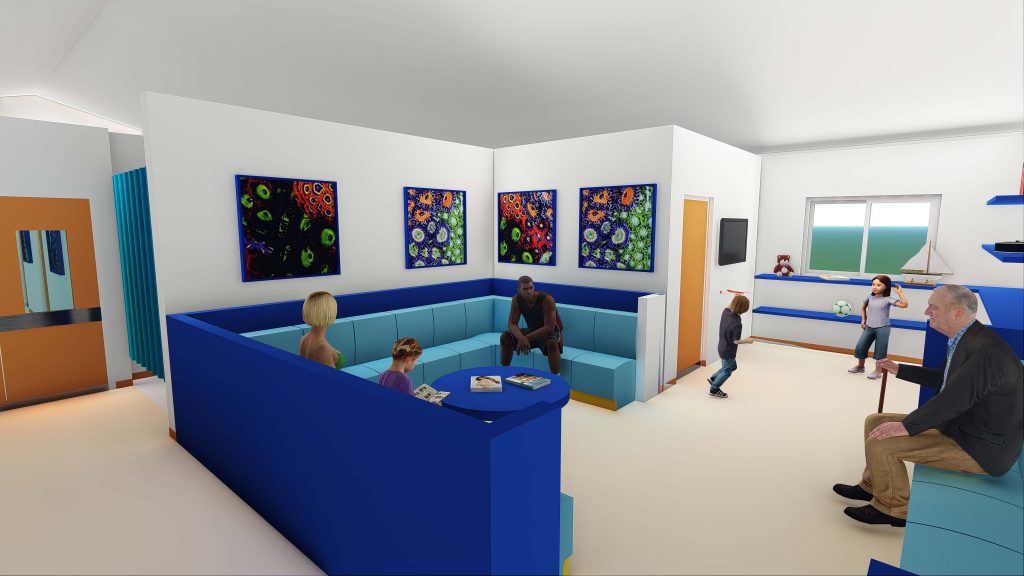
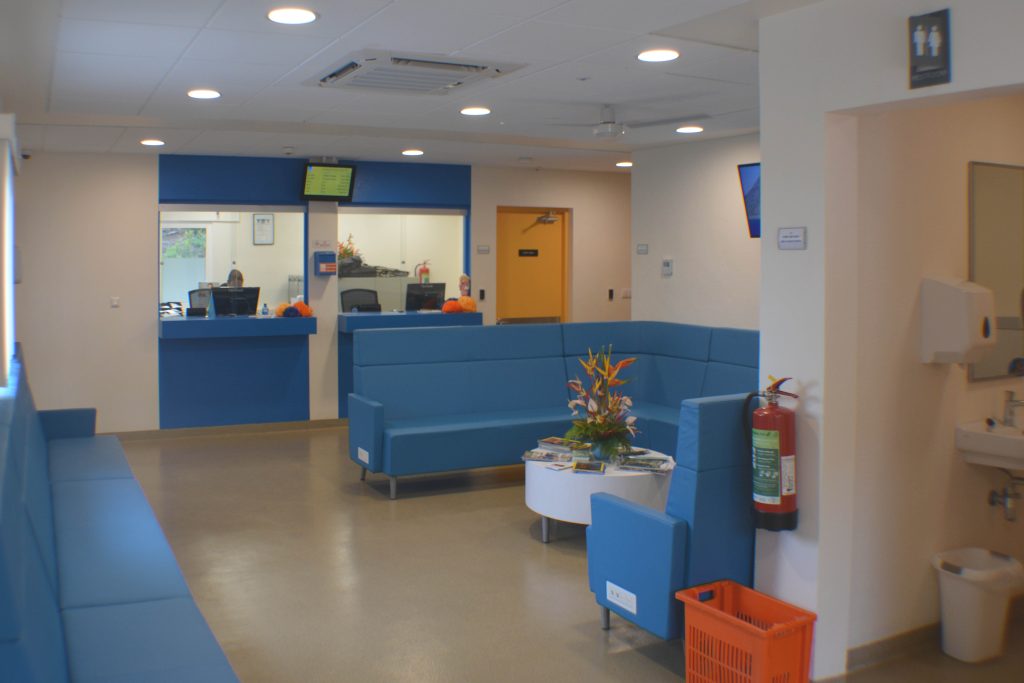
The interior design is organized around improved sightlines, spatial legibility, and functional zoning. Existing partitions were selectively removed to enhance overview and orientation, while the reception desk was repositioned to strengthen visual control at the entrance. A limited color palette is used to clearly distinguish different programs.   Public areas and corridors feature sand-toned resin floors, while treatment rooms, laboratories, and patient wards are articulated through Caribbean blue flooring.

Walls are finished in coral-inspired hues with subtle grey and pink undertones, creating a calm and hygienic atmosphere. Furniture, doors, and interior elements introduce carefully calibrated accents of deep ocean blue and mango orange, while privacy screens and curtains maintain a consistent Caribbean blue palette. Enlarged microbiological images of coral structures are integrated throughout the interior, conceptually linking the hospital to its marine and ecological context.

Patient rooms open onto patio-like loggias via sliding glass doors, offering access to daylight, vegetation, and fresh air while preserving privacy and separation from public circulation. 

 The climate concept replaces an inefficient hybrid ventilation system with a fully controlled, hermetically sealed installation, ensuring a stable, sterile, and energy-efficient indoor environment. The lighting design combines functional medical illumination with accent lighting to introduce a more domestic and humane spatial quality.