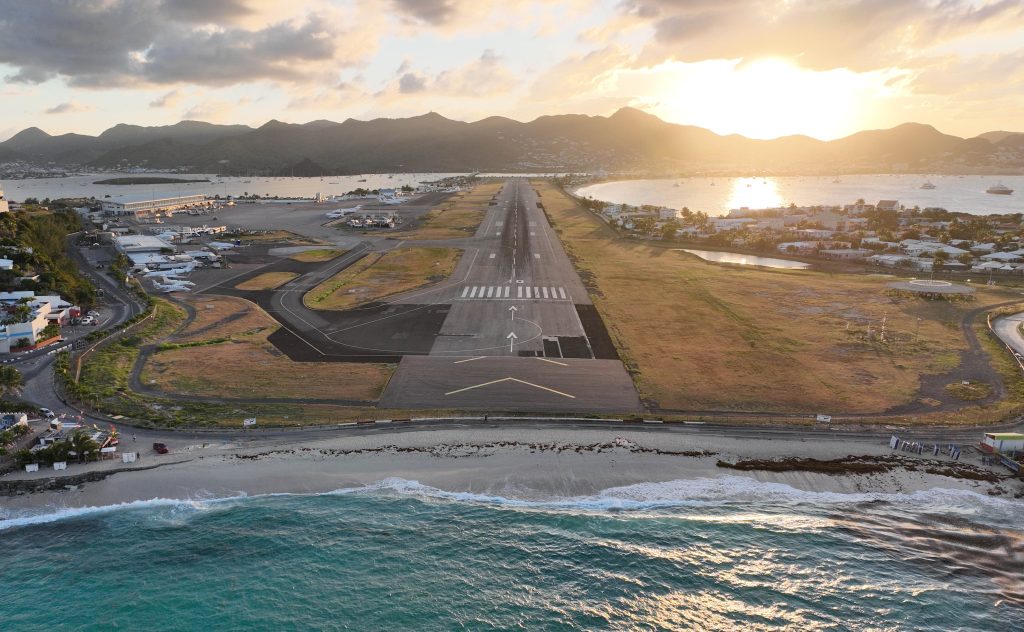
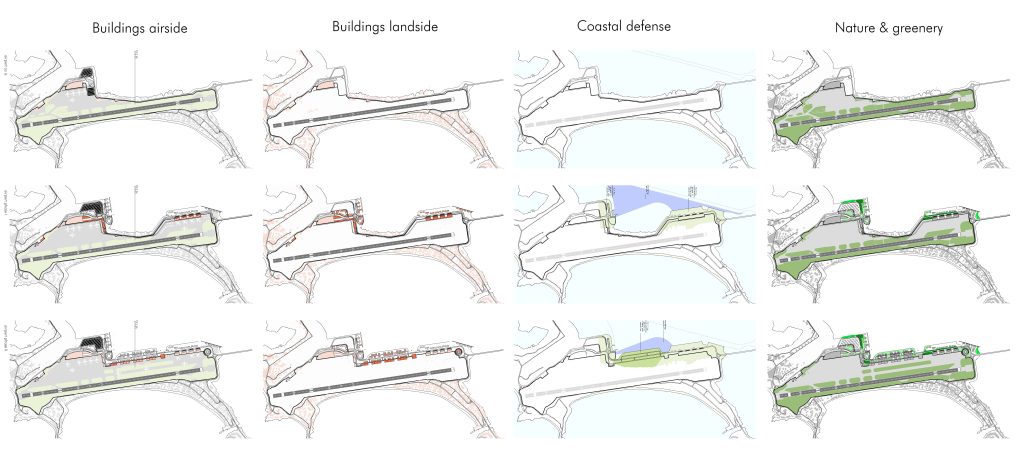
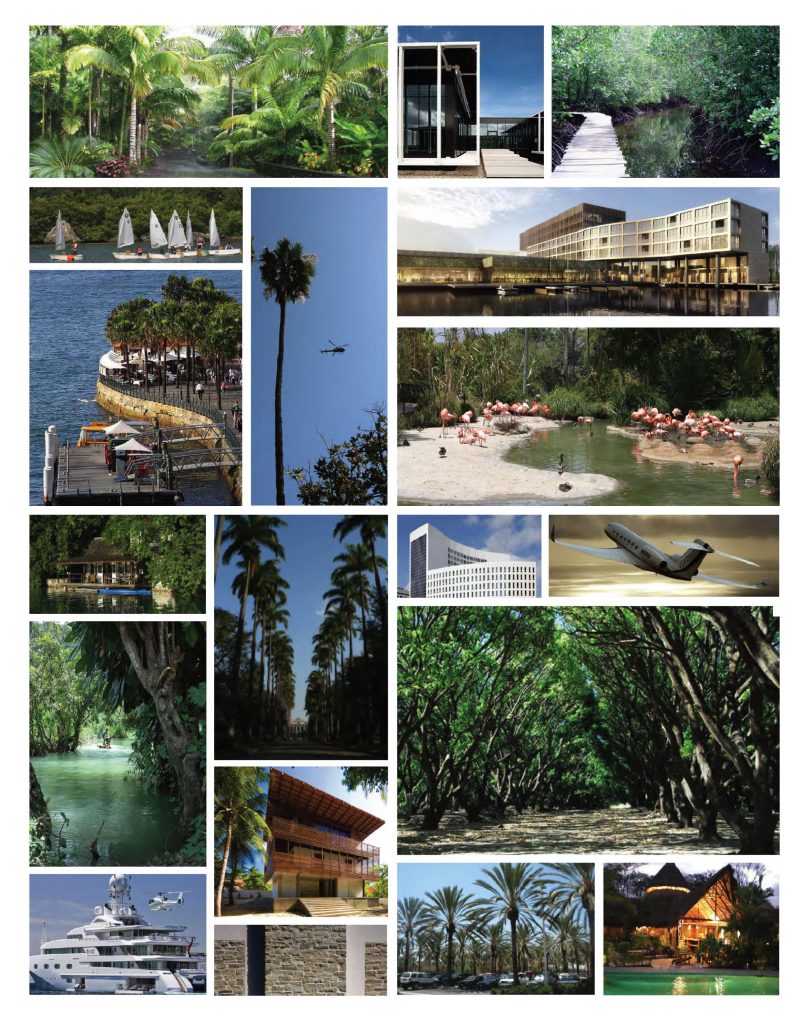
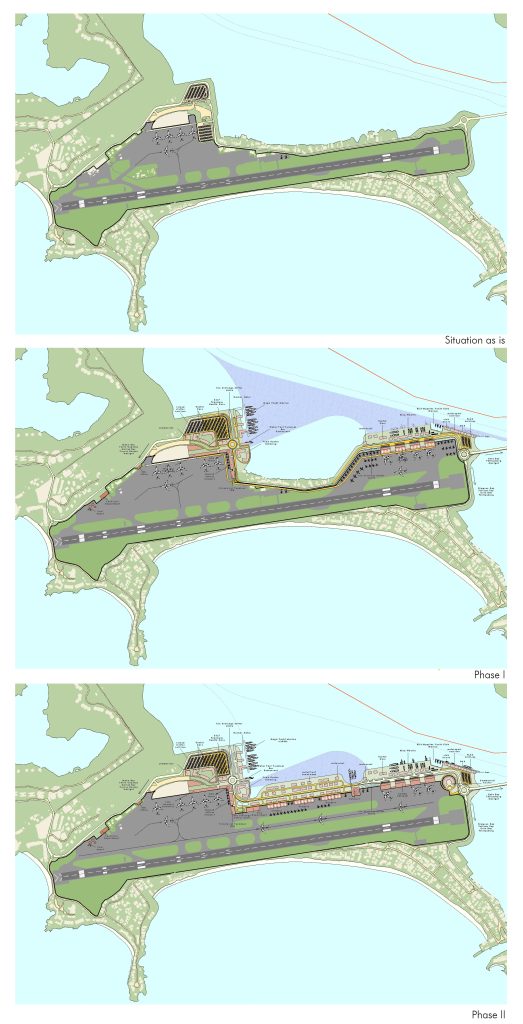
This masterplan was developed with the support of the Dutch architectural office DAM & Partners and the engineering firm Lievense. The central concept is the strategic expansion of the airport through the introduction of an additional taxiway. To achieve this, a phased development strategy was formulated, encompassing successive stages of demolition, land reclamation, relocation, infrastructure development, real estate programming, ecological enhancement, and the integration of a solar energy concept.
As early as 2013, DAM Caribbean proposed the development of an extensive solar park within the airport area.
In addition, the newly reclaimed land was designed with a coastline that more than doubles the length of the existing waterfront, creating expanded opportunities for natural habitats and ecological resilience.
Rather than a linear shoreline, the coastline follows a sinuous configuration, increasing the interface between land and water.
Alongside these natural waterfronts, a series of quay walls and docks are incorporated to establish a direct maritime connection to the airport. This infrastructure enables access by water taxis as well as high-end travelers using the private jet terminal, reinforcing the airport’s multimodal accessibility.
The underlying principles of this masterplan remain valid today. The initial implementation phase is anticipated to commence on the eastern side of the site, currently referred to as Land A & B.