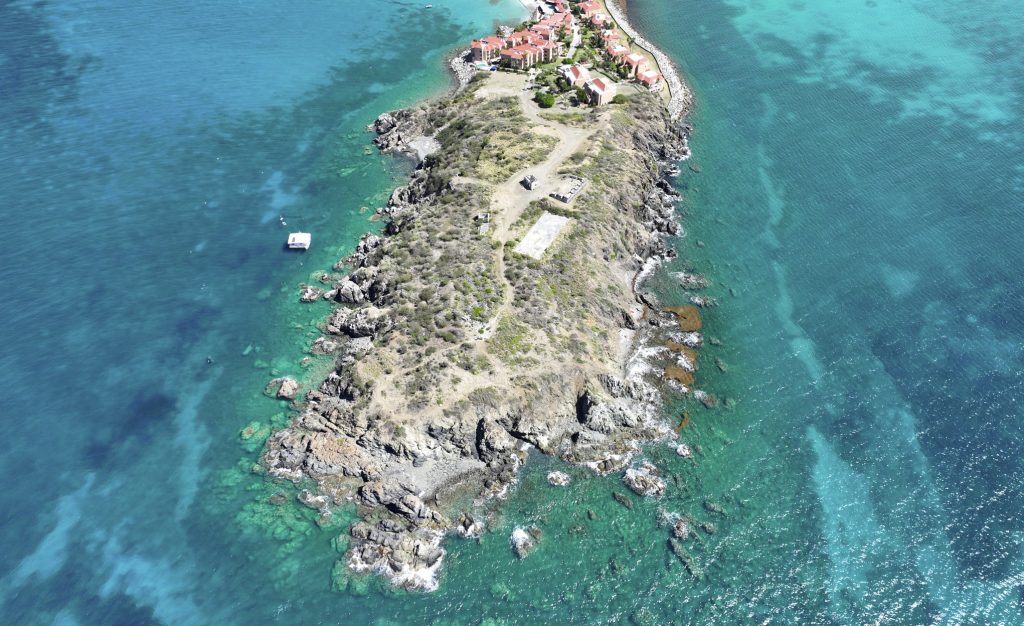
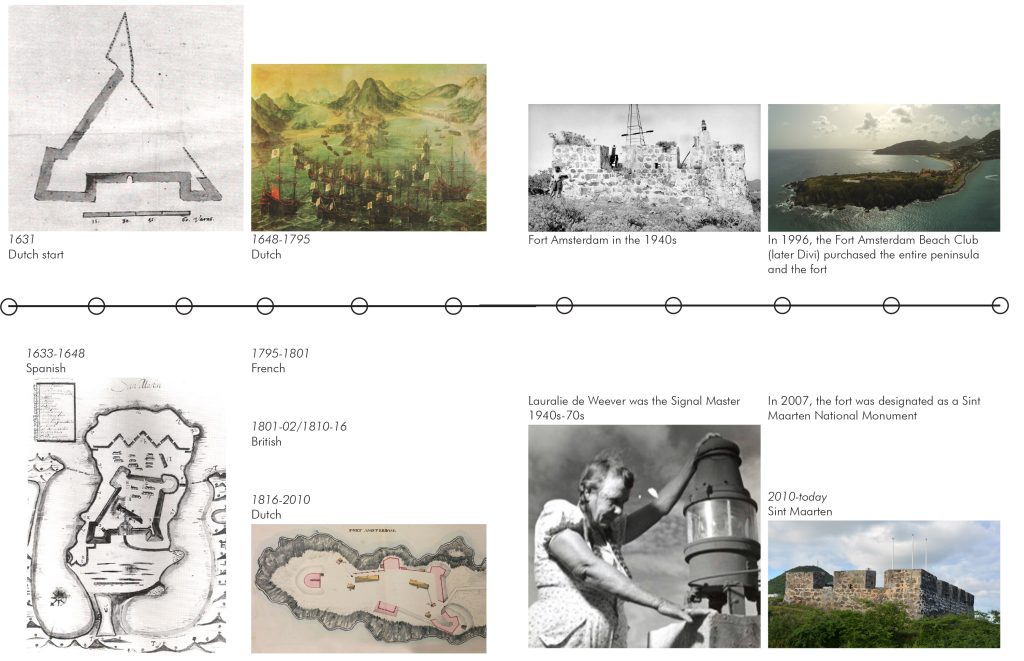
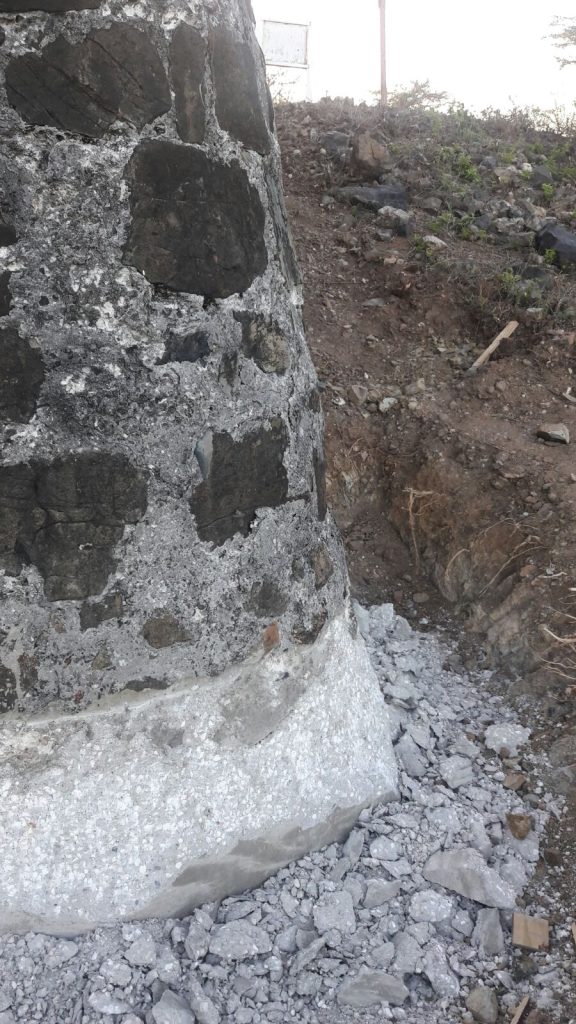
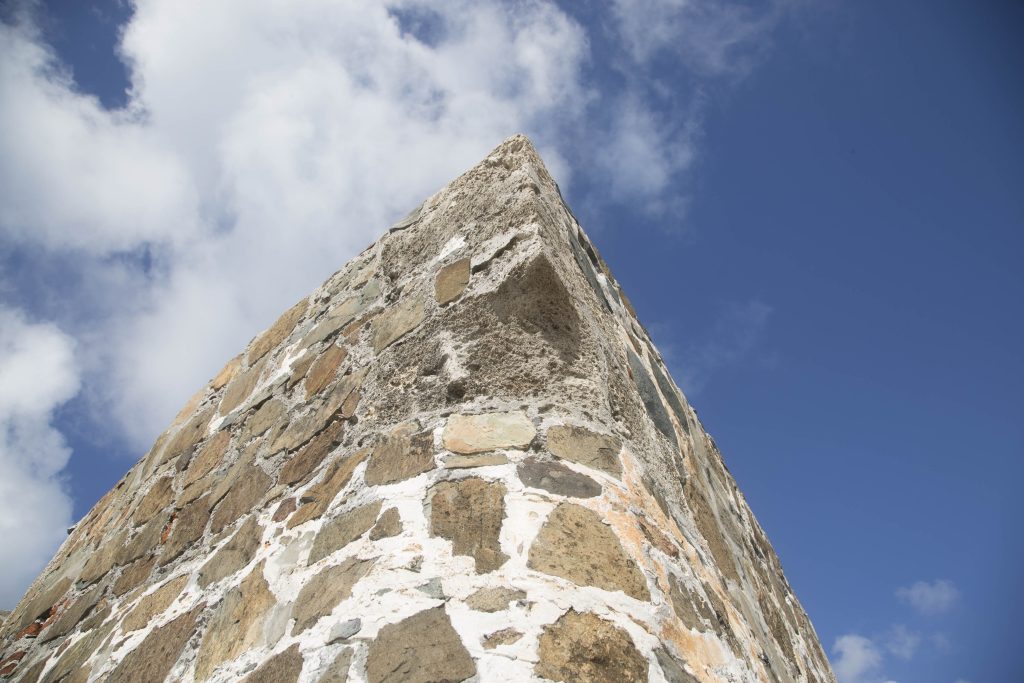
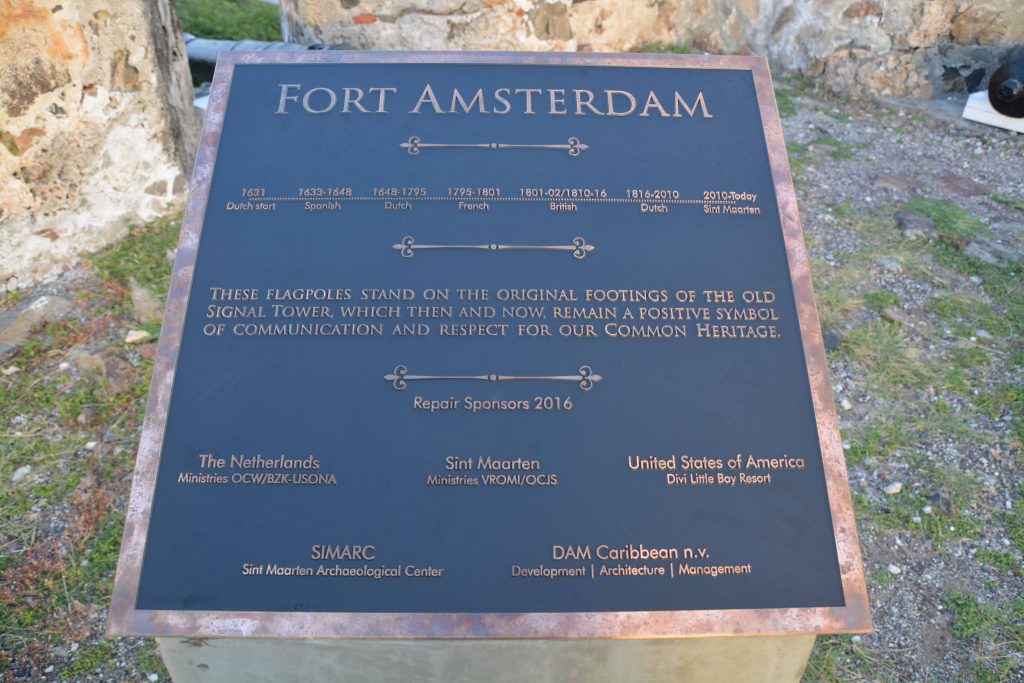
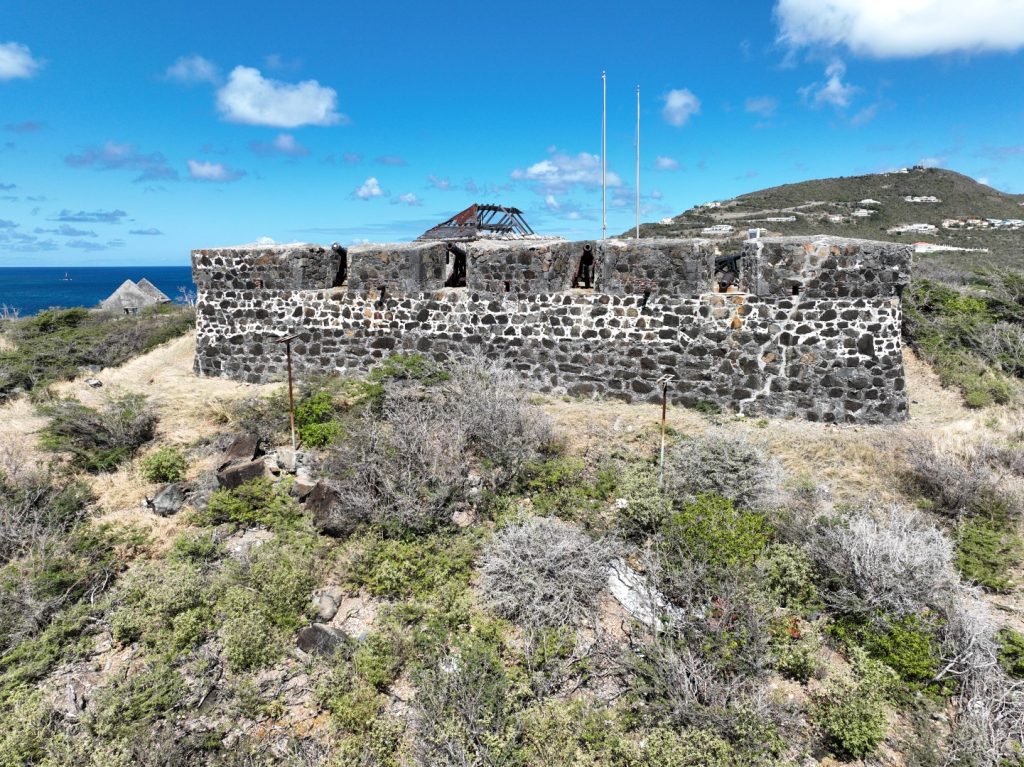
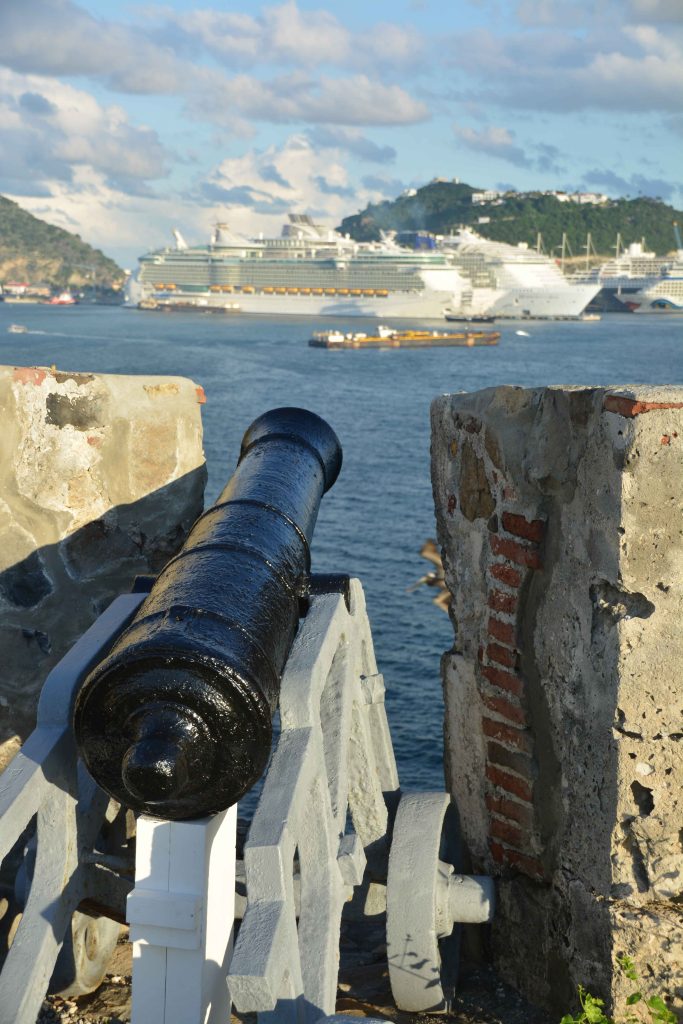
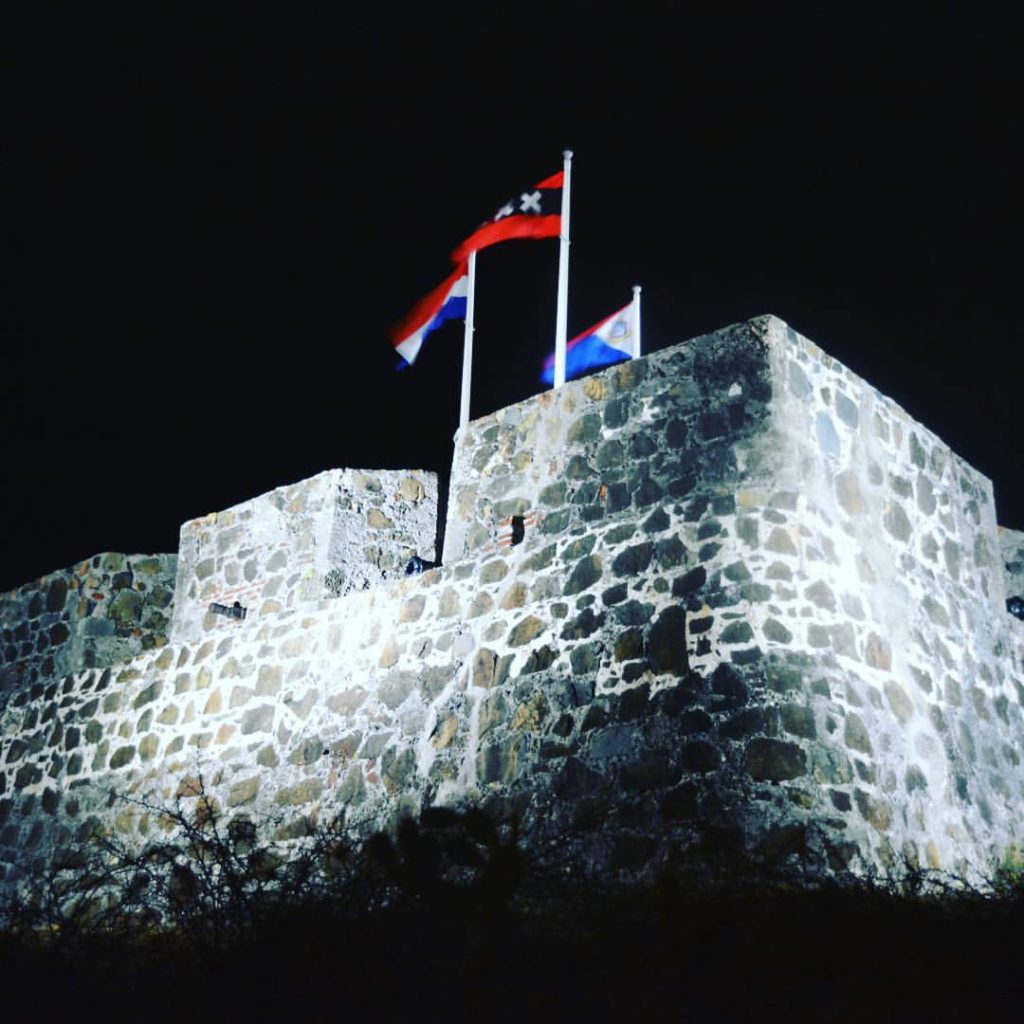
Fort Amsterdam is one of the oldest surviving forts in the Caribbean. It is unique in its hybrid design, combining elements of both Spanish and Dutch military architecture. Over centuries of coastal erosion, the foundation beneath one of the bastions became severely undermined, bringing the structure close to collapse into the Caribbean Sea.
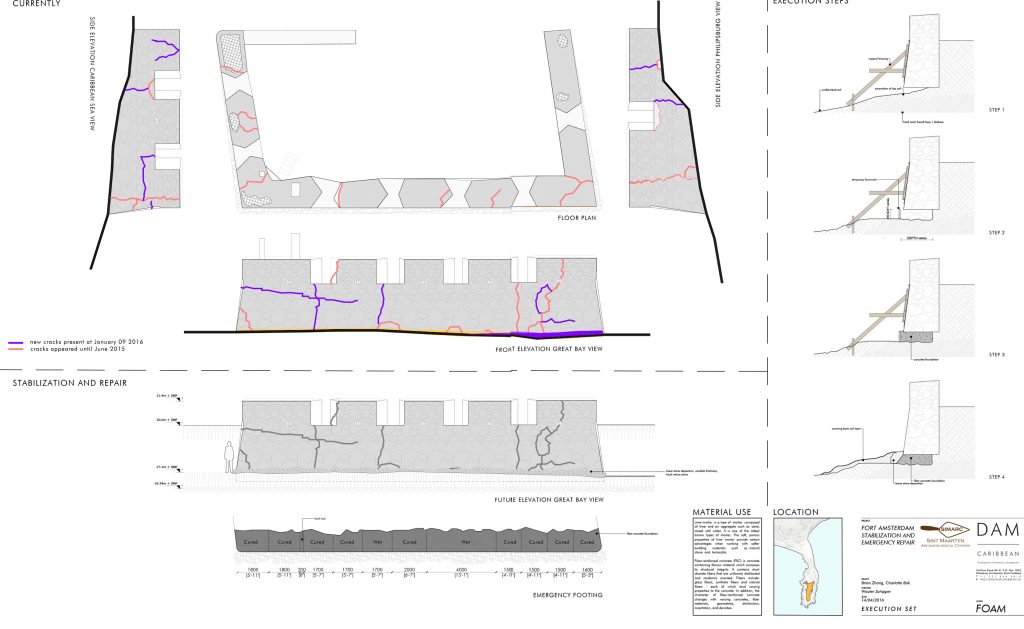
In early 2014, the Government of Sint Maarten requested The Port of Sint Maarten to commission a structural survey to assess the fort’s integrity and stability. DAM Caribbean carried out this initial survey on behalf of the Port. The resulting report concluded that, without urgent stabilization measures, the fort was at imminent risk of collapsing into Great Bay.
In 2015, archeologist Dr. Jay Haviser took the initiative to secure external funding for the project. Once funding was obtained, Divi Little Bay Resort, as the property owner, applied for a monument permit through the Ministry of OCJS, Department of Culture. The permit was granted in June 2016.
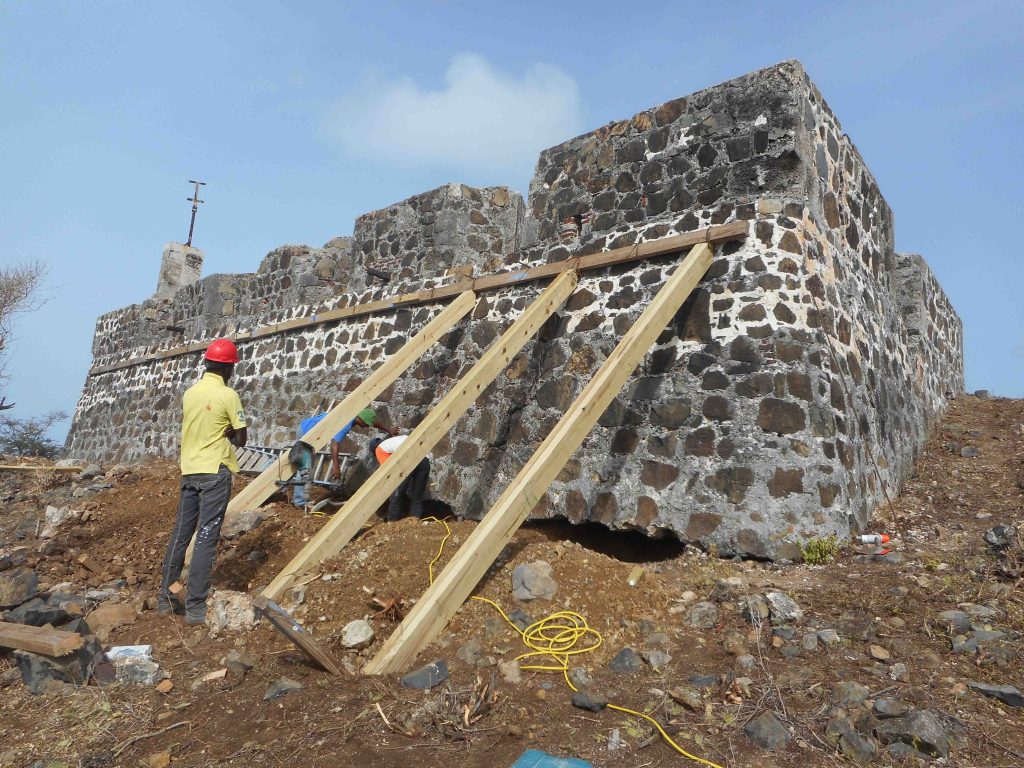
Following a contractual agreement between Divi Little Bay Resort and SIMARC, emergency restoration works commenced in July 2016 and were completed in December 2016. The works were executed by LICCOM N.V., with technical guidance from restoration specialist Wim de Jong and under the supervision of
DAM Caribbean N.V.
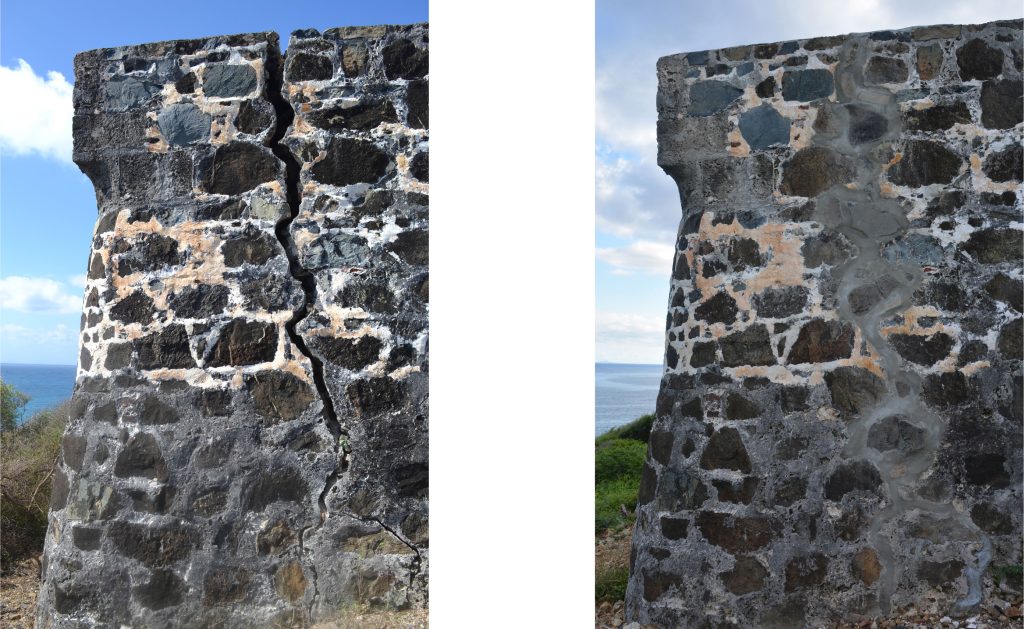
The restoration process was necessarily experimental, involving foundation repairs beneath a nearly 400-year-old structure built by Spanish and Dutch colonists. A deliberately slow and careful approach was adopted, with damaged sections reconstructed stone by stone. While the scarf of the main structural crack remains visible, it has been significantly reduced through skilled masonry and the use of traditional lime mortar. The northeast bastion is now stabilized and is expected to endure for centuries to come.
DAM Caribbean is proud to support specialized projects such as this. Respect for heritage is a core part of our foundation, and we believe that preserving historic structures also allows us to learn from the past while safeguarding it for future generations.