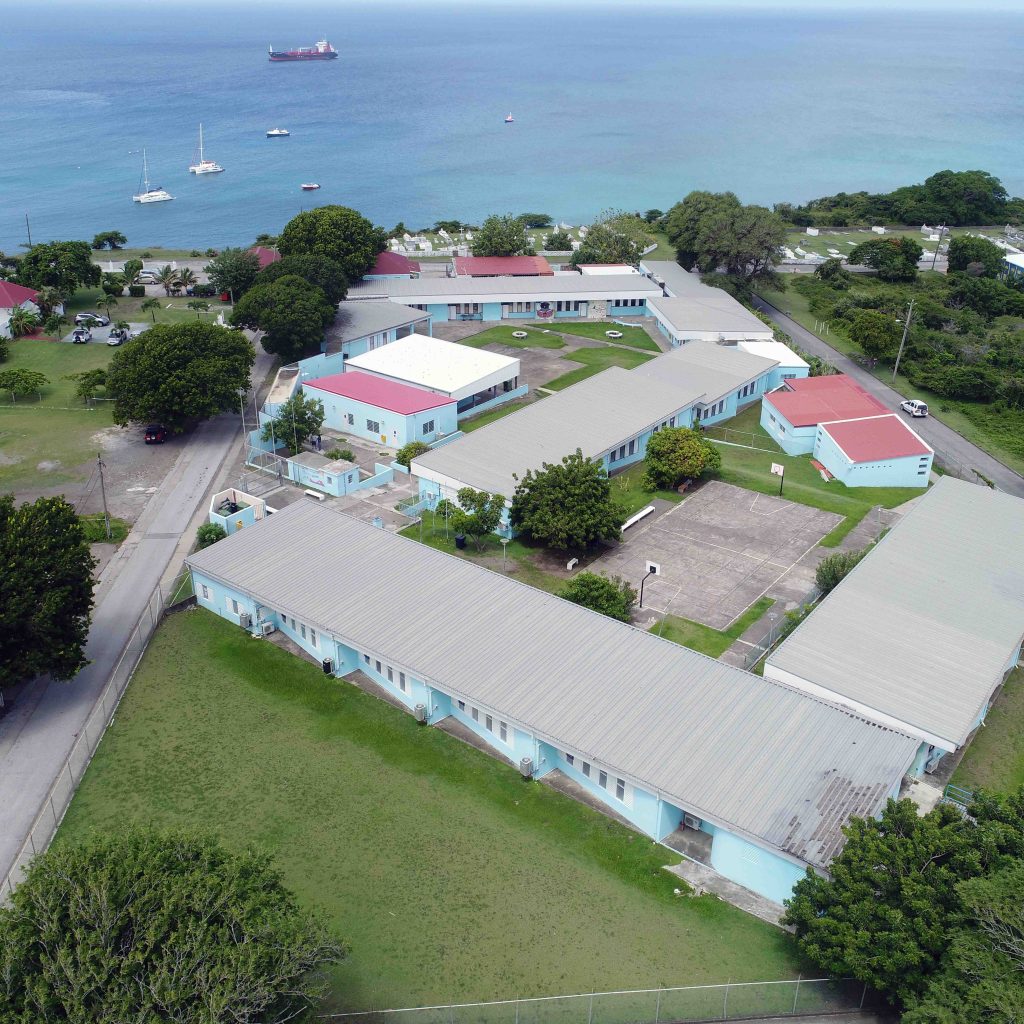
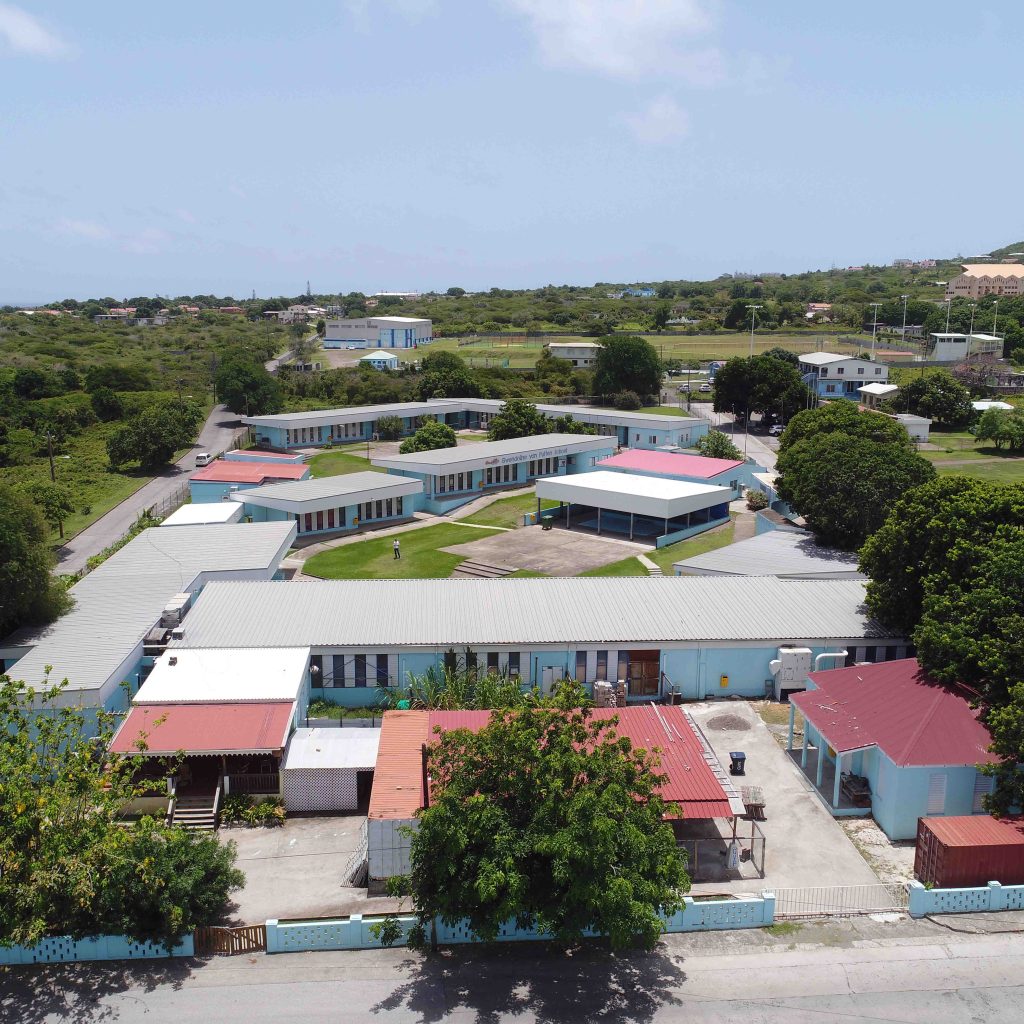
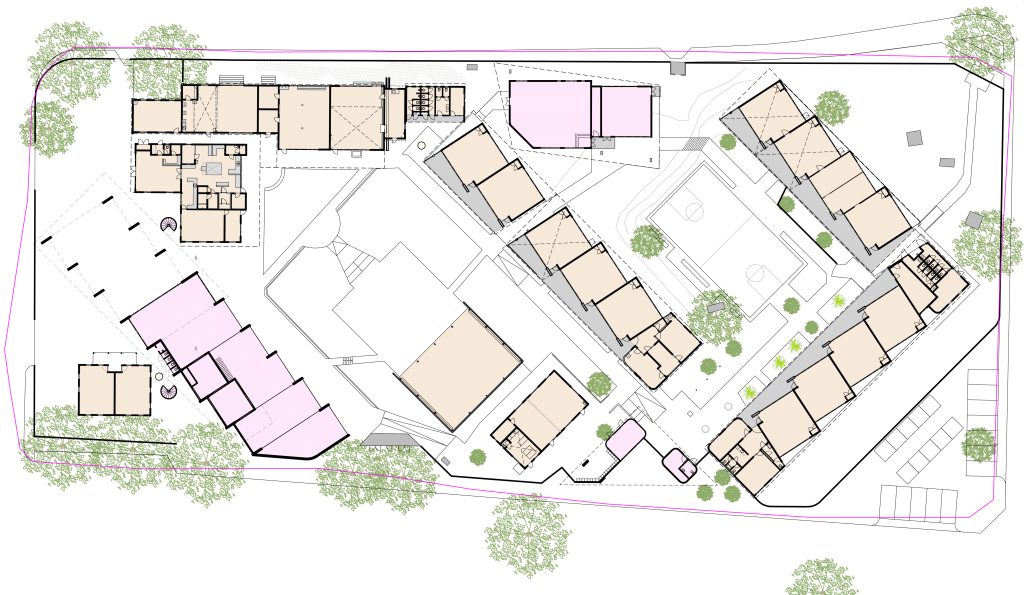
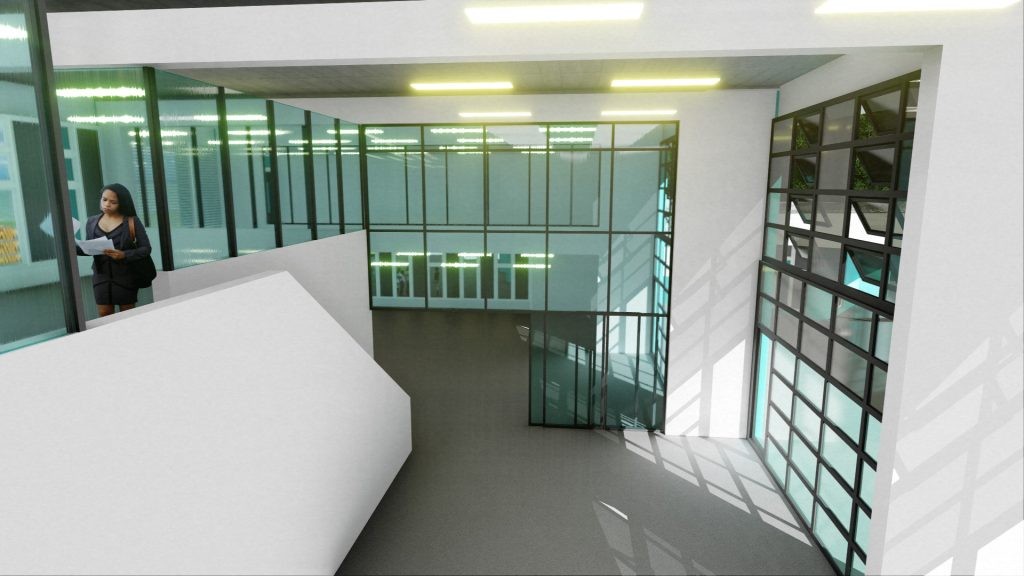
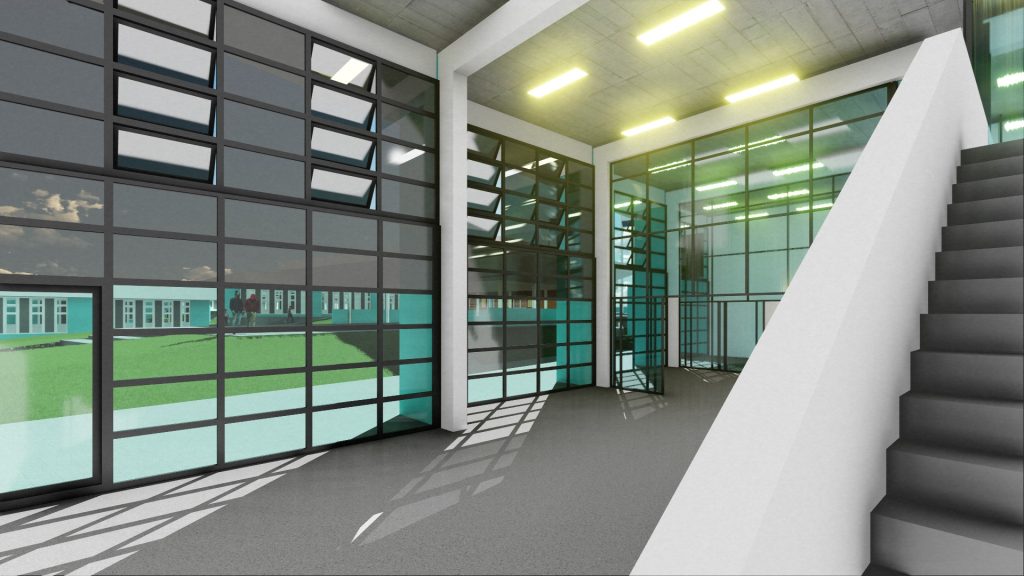
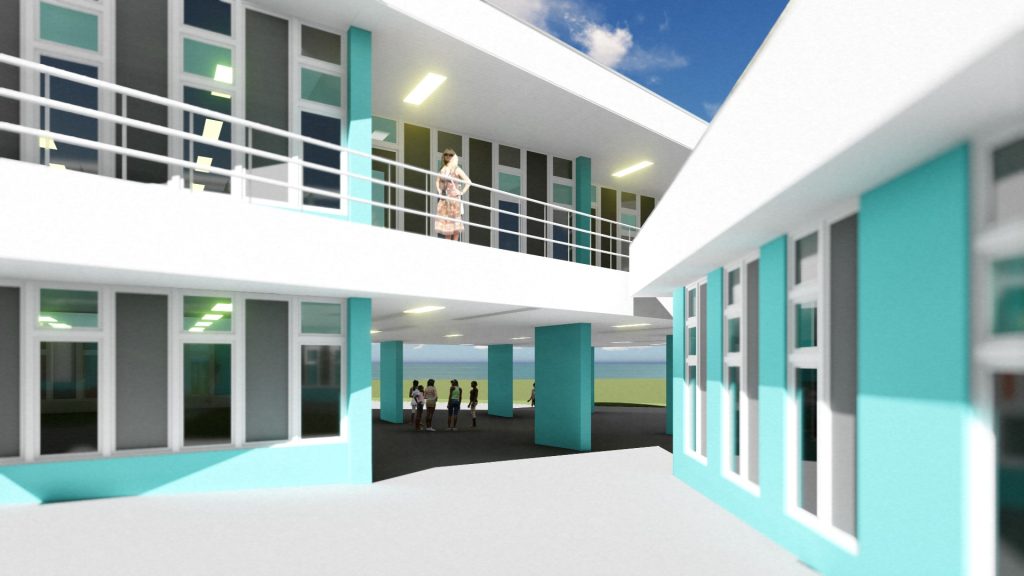
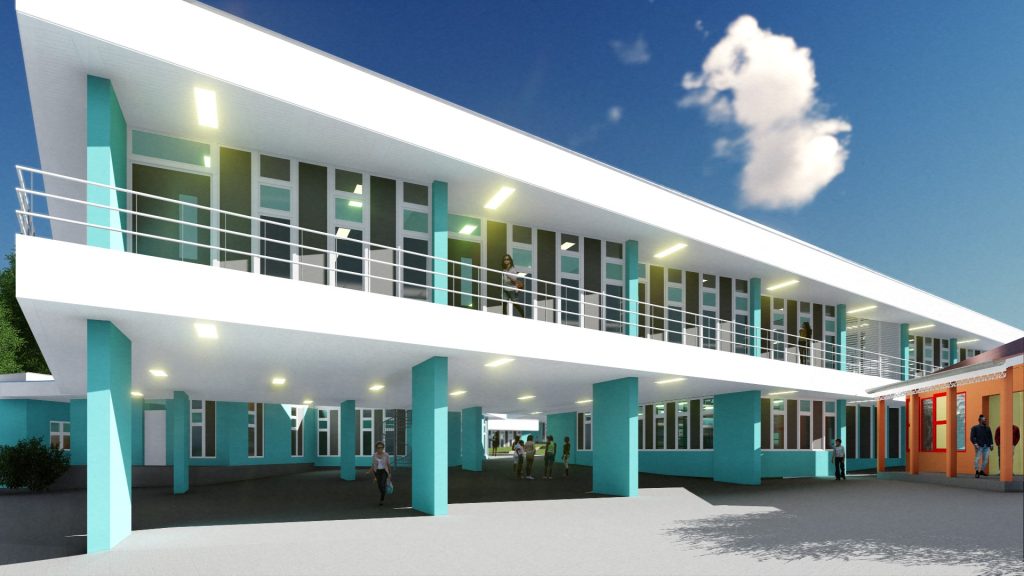
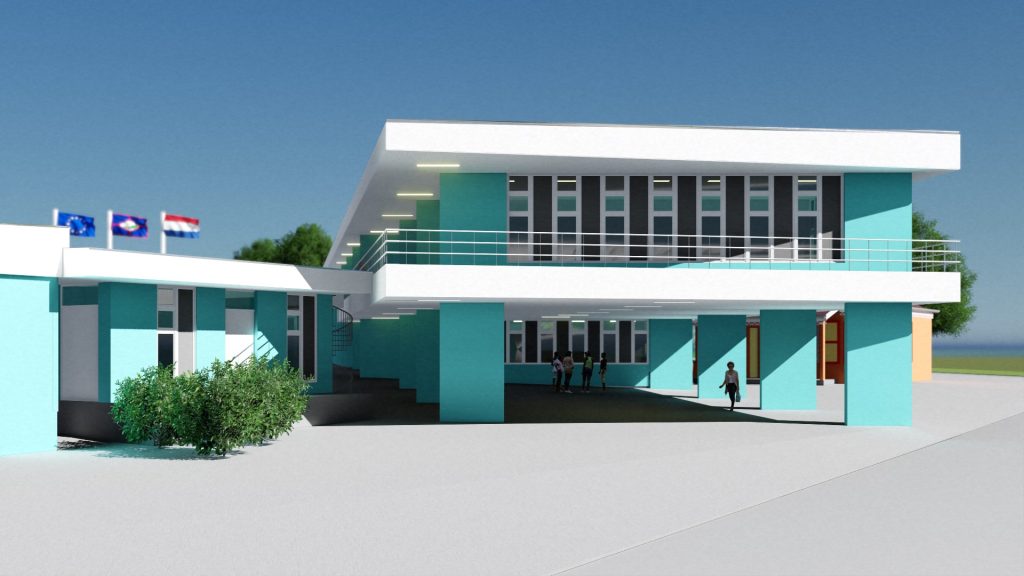
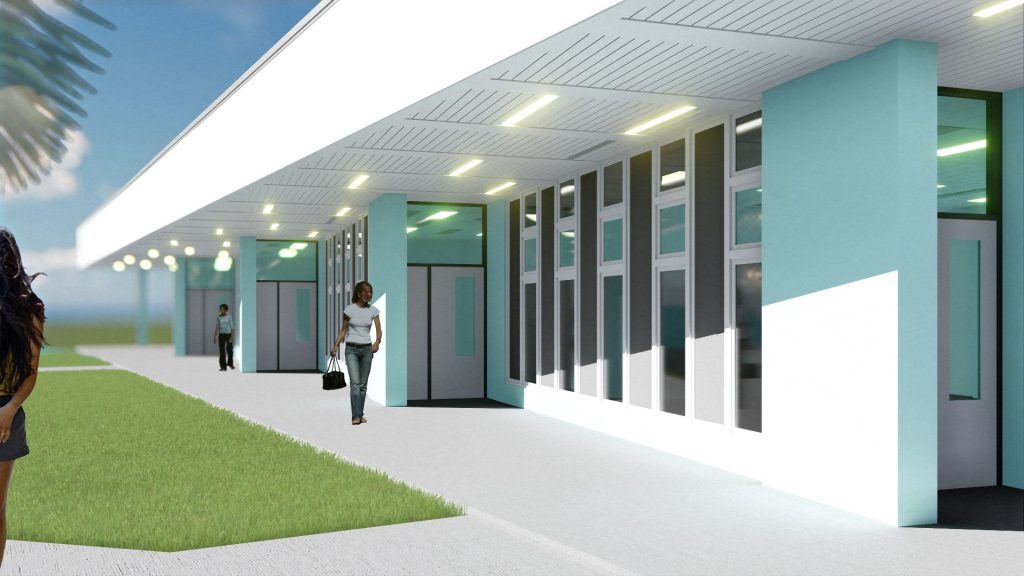
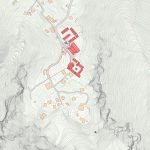
This project concerned the major renovation and extension of a high school campus on Sint Eustatius, and was developed from concept through the Final Design building permit ready. The existing campus, originally constructed in the 1980s, is characterized by a distinctive architectural language defined by diagonal geometries and carefully framed sightlines. These spatial qualities formed the conceptual foundation for the proposed extension.
The original design fosters an open yet secure environment, particularly within its courtyards, where visual connections enhance orientation, safety, and social interaction.
This spatial approach reflects the local context of Sint Eustatius, where daily life unfolds within a strong sense of safety and openness. The experience of public space on the island differs fundamentally from that of the mainland, with permeability, trust, and informal use forming integral aspects of the social fabric.
Architecturally, the campus is unified through roof structures with generous cantilevers that reinforce the indoor–outdoor relationship while providing essential shading in the tropical climate. Environmental resilience was a key design driver: the buildings were engineered to withstand hurricane-force winds and seismic activity, ensuring long-term safety and durability.
Despite the completion of the Final Design and start for acquisition of necessary permits, the project was suddenly discontinued. Changes in political relations between the Dutch government in The Hague and the local administration of Sint Eustatius led to a strategic shift. The original campus was designated for complete demolition, and plans were redirected toward the construction of a new, compact school on an alternative site on the island.